
Construction and land-development projects can significantly disturb the soil. Once vegetation is removed and the ground is exposed, rainwater and runoff can quickly carry soil away, creating erosion, sedimentation and drainage problems.
For contractors and developers in North Carolina, erosion control should be part of the project plan from the beginning—not something addressed after erosion has already become a problem.
Proper erosion and sediment control helps protect the site, surrounding properties and waterways while keeping the project moving toward successful stabilization.
Why Construction Sites Are Vulnerable to Erosion
Undisturbed soil is naturally protected by vegetation, roots and other ground cover. Construction changes that environment by clearing vegetation, grading the site and exposing large areas of soil.
When rain falls on exposed soil, water can carry sediment downhill and off the construction site. Steeper slopes and concentrated runoff can make the problem even worse.
Without appropriate controls, erosion can lead to:
- Loss of valuable topsoil
- Sediment leaving the construction site
- Erosion of slopes and drainage areas
- Mud and sediment on surrounding roads or properties
- Damage to newly graded areas
- Problems establishing vegetation
- Increased difficulty stabilizing the site
Erosion Control vs. Site Stabilization
Erosion control and site stabilization work together, but they address different stages of a construction project.
Erosion control focuses on preventing soil from being displaced and controlling sediment and runoff while the site is being disturbed.
Site stabilization focuses on establishing a stable surface that can withstand rainfall and runoff. Depending on the site, this may involve vegetation, hydroseeding, erosion control matting, slope stabilization or other measures.
The appropriate approach depends on the project’s conditions, including the amount of disturbed soil, slopes, drainage patterns and the stage of construction.
Common Erosion Control Methods
There isn’t one solution that works for every construction site. Different areas may require different types of erosion and sediment controls.
Silt Fences
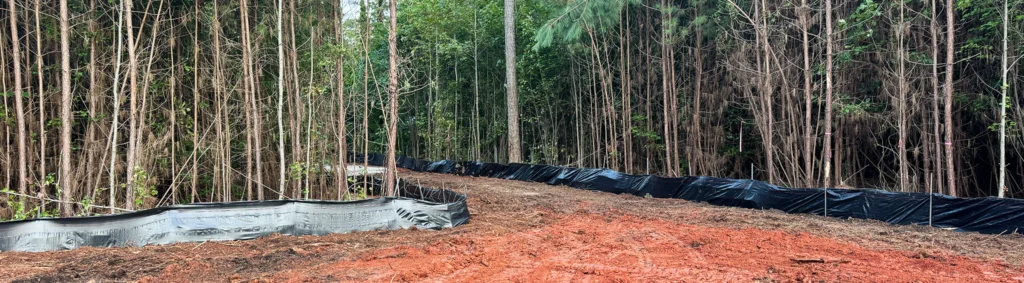
Silt fences can be used around portions of a disturbed site to help control sediment carried by runoff. Proper placement and installation are important for these systems to work effectively.
Wattles
Wattles can help slow runoff and reduce the movement of sediment, particularly on slopes and other areas where water needs to be controlled.
Erosion Control Matting
Matting can provide additional protection for exposed soil and slopes while vegetation becomes established. It can be especially useful in areas vulnerable to erosion from rainfall and runoff.
Hydroseeding and Grassing
Establishing vegetation is an important part of long-term site stabilization. Hydroseeding and grassing can help establish ground cover over disturbed areas and reduce the potential for future erosion.
Slope Stabilization
Sloped areas can be particularly susceptible to erosion because water naturally moves downhill. Stabilization measures can help protect exposed slopes and reduce soil movement.
Rip Rap
In areas where concentrated water flow creates erosion concerns, rip rap can provide a durable surface designed to withstand runoff and help stabilize vulnerable areas.
Why Timing Matters
One of the most important considerations in erosion control is when the controls are installed.
Waiting until a major storm has already washed soil from a construction site can make the problem much more difficult and expensive to correct.
Planning erosion and sediment controls as part of the construction process allows vulnerable areas to be addressed before significant erosion occurs. As construction progresses, temporary controls may also need to be adjusted or supplemented as grading and site conditions change.
North Carolina Construction Projects Require Careful Planning
Erosion and sediment control is an important consideration for construction and land-development projects throughout North Carolina. The specific requirements for a project can depend on factors such as the size and scope of the disturbance, site conditions and applicable regulations.
Contractors and developers should make sure their erosion-control approach is appropriate for the project and that required measures are properly installed and maintained.
Eastern Erosion Control provides erosion-control and site-stabilization services for construction and development projects throughout North Carolina, South Carolina and Virginia.
Services include silt fences, wattles, hydroseeding and grassing, erosion control matting, slope stabilization, rip rap, tree protection and other erosion-control solutions.
Every site has different conditions. The right combination of erosion-control measures can help protect exposed soil, manage runoff and move a project toward final stabilization.
Planning a construction or development project in North Carolina? Contact Eastern Erosion Control to discuss your erosion-control and site-stabilization needs.