Construction projects play an important role in building communities across North Carolina, but they also disturb soil that can easily be carried away by rainwater. Without proper erosion and sediment control measures, that sediment can wash into nearby streams, rivers, lakes, and stormwater systems, causing environmental damage and creating costly maintenance issues. One of the simplest and most effective ways to prevent this is with properly installed silt fence.
Whether you’re developing a residential neighborhood, constructing a commercial building, or working on public infrastructure, silt fence is an essential part of protecting the environment and maintaining compliance with erosion control regulations.
What Is a Silt Fence?
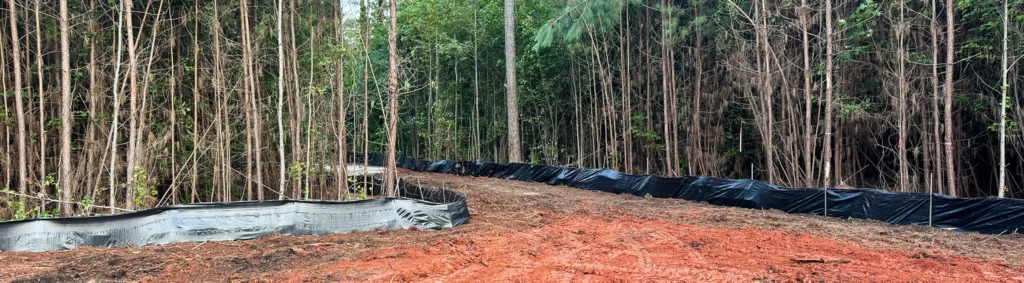
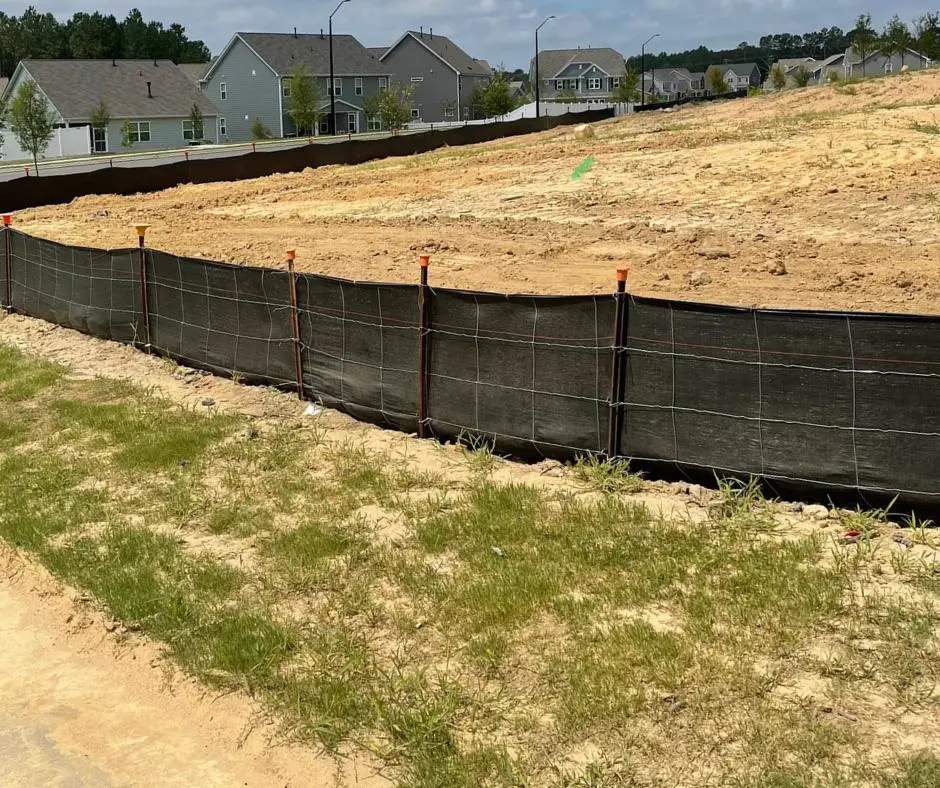
A silt fence is a temporary sediment control device made from geotextile fabric attached to wooden or metal posts. It is installed along the perimeter of a construction site or other areas where soil has been disturbed to help keep sediment from leaving the site during rain events.
Rather than stopping water completely, a silt fence slows stormwater runoff, allowing suspended soil particles to settle before the water continues downstream. This helps keep sediment where it belongs while reducing the impact on nearby waterways and drainage systems.
Throughout North Carolina, silt fence is commonly used on construction projects of all sizes to protect water quality and meet local and state erosion control requirements.
How Silt Fence Works
When rain falls on exposed soil, it creates runoff that can carry sediment downhill. If left unchecked, this sediment can enter storm drains, ditches, streams, ponds, and other waterways.
A properly installed silt fence acts as a barrier that slows the flow of water. As the runoff loses speed, the heavier soil particles settle behind the fence while cleaner water is allowed to pass through the fabric.
Although simple in design, silt fence is one of the most widely used Best Management Practices (BMPs) because it provides an effective first line of defense against sediment leaving a construction site.
Why Protecting Streams and Stormwater Systems Matters
Sediment is one of the leading pollutants affecting waterways during construction. When excessive amounts of soil enter streams and stormwater systems, it can create a variety of problems.
Sediment can reduce water quality, harm fish and aquatic habitats, clog culverts and storm drains, fill detention ponds, and increase maintenance costs for property owners and municipalities.
Excessive sediment buildup can also reduce the effectiveness of stormwater infrastructure, increasing the risk of localized flooding during heavy rain events.
By keeping sediment contained on the job site, silt fence helps protect both the environment and public infrastructure throughout North Carolina.
Where Silt Fence Is Commonly Used
Silt fence is commonly installed on projects of all sizes, including:
- Residential developments
- Commercial construction sites
- Road and highway projects
- Utility installations
- Land clearing projects
- Municipal infrastructure improvements
- Industrial developments
Any project that disturbs soil can benefit from properly designed erosion and sediment control measures.
Proper Installation Makes the Difference
While silt fence is a relatively simple product, its effectiveness depends on proper installation.
Common installation mistakes include failing to trench the fabric into the ground, spacing posts too far apart, installing the fence in concentrated water flow, or neglecting routine maintenance after storms. These issues can allow sediment to bypass the fence, reducing its effectiveness and potentially resulting in failed inspections or environmental violations.
Professional installation helps ensure the silt fence performs as intended throughout the life of the project.
Regular Inspection and Maintenance Are Essential
Silt fence should be inspected regularly, especially after heavy rainfall.
Routine maintenance includes repairing damaged sections, replacing torn fabric, reinforcing weakened posts, and removing accumulated sediment before it reaches excessive levels. Once vegetation has become established and the site is permanently stabilized, the temporary silt fence can be removed.
Regular inspections help maintain compliance while keeping erosion control measures functioning properly.
Serving Contractors Across Eastern North Carolina
Eastern Erosion Control provides professional silt fence installation and erosion control services for contractors, developers, municipalities, utility companies, and industrial clients throughout Eastern North Carolina. Our experienced team understands the unique challenges of working in the region’s diverse landscapes and changing weather conditions, helping keep projects compliant while protecting nearby streams, wetlands, and stormwater systems.
Whether your project is located in Greenville, New Bern, Jacksonville, Goldsboro, Washington, Kinston, Rocky Mount, Wilmington, or anywhere else in Eastern North Carolina, we have the experience and resources to deliver dependable erosion and sediment control solutions.
Contact Eastern Erosion Control
Whether you’re preparing for a new development, roadway project, utility installation, or commercial construction, Eastern Erosion Control can provide the erosion and sediment control solutions your project needs.
Contact Eastern Erosion Control today to learn more about our professional silt fence installation and erosion control services throughout Eastern North Carolina.